




Blue-Green Algae (Cyanobacteria): What Residents Need to Know
 Blue-Green Algae (Cyanobacteria): What Residents Need to Know
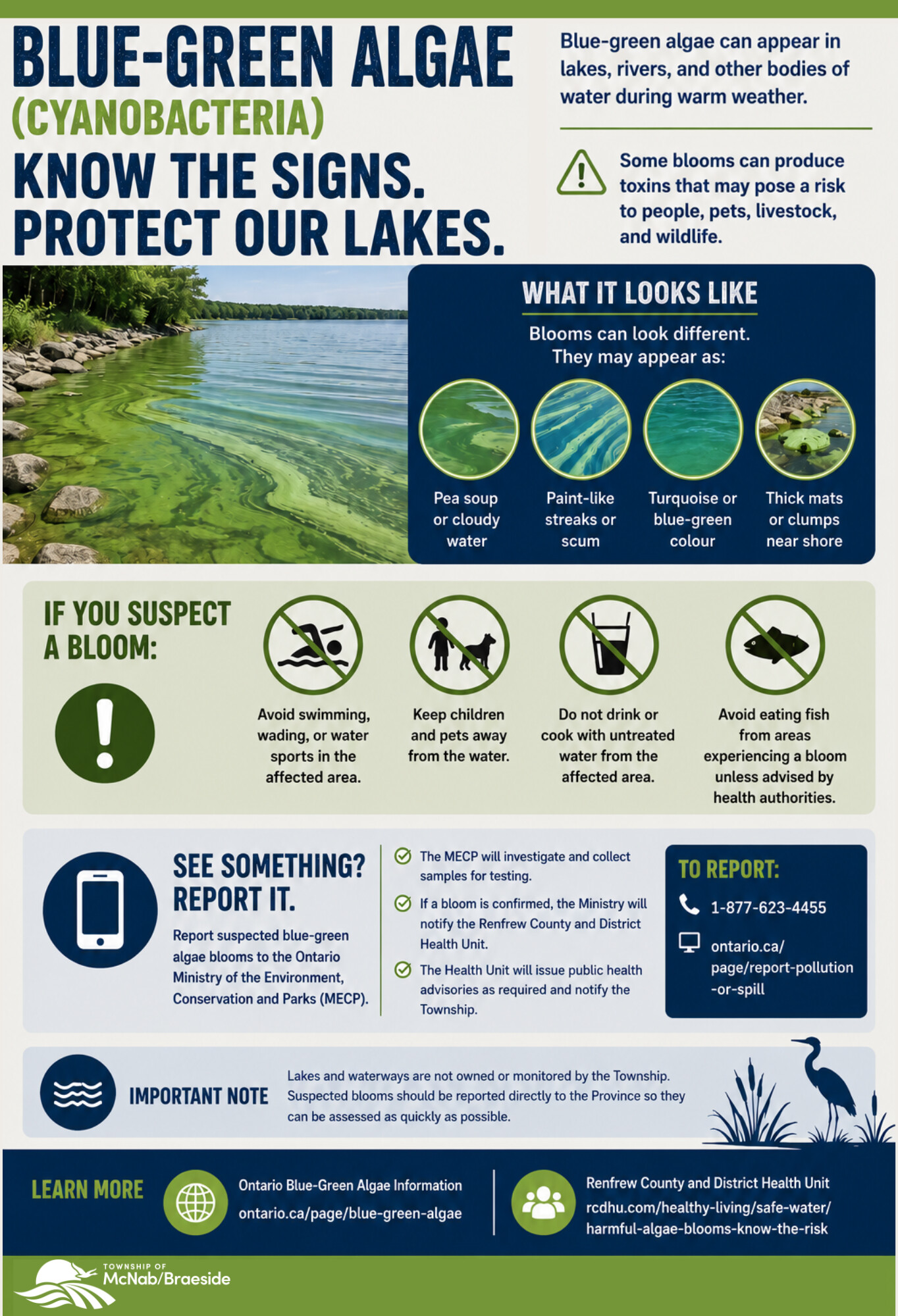
 Blue-green algae, also known as cyanobacteria, can sometimes appear in lakes, rivers, and other bodies of water during warm weather. Some blooms can produce toxins that may pose a risk to people, pets, livestock, and wildlife.
 How to Recognize a Possible Bloom
Blue-green algae may appear as:
• Bright green, blue-green, turquoise, or pea-soup coloured water
• Paint-like streaks or scum floating on the surface
• Thick mats or clumps near the shoreline
• Water that looks cloudy or contains floating particles
• Bright green, blue-green, turquoise, or pea-soup coloured water
• Paint-like streaks or scum floating on the surface
• Thick mats or clumps near the shoreline
• Water that looks cloudy or contains floating particles
If you suspect a bloom:
• Avoid swimming, wading, or water sports in the affected area.
• Keep children and pets away from the water.
• Do not drink or cook with untreated water from the affected area.
• Avoid eating fish from areas experiencing a bloom unless local health authorities advise otherwise.
• Keep children and pets away from the water.
• Do not drink or cook with untreated water from the affected area.
• Avoid eating fish from areas experiencing a bloom unless local health authorities advise otherwise.
 Reporting a Suspected Bloom
If you observe what appears to be a blue-green algae bloom, report it to the Ontario Ministry of the Environment, Conservation and Parks (MECP).
The MECP is responsible for investigating suspected blooms and collecting samples for testing. If a bloom is confirmed, the Ministry will notify the Renfrew County and District Health Unit, which will issue public health advisories as required.
 Important Note
The Township does not own or monitor local lakes and waterways. Suspected blooms should be reported directly to the Province so they can be assessed as quickly as possible.
For more information:
• Ontario Blue-Green Algae Information: https://www.ontario.ca/page/blue-green-algae
• Renfrew County and District Health Unit: https://www.rcdhu.com/healthy-living/safe-water/harmful-algae-blooms-know-the-risk/
• Ontario Blue-Green Algae Information: https://www.ontario.ca/page/blue-green-algae
• Renfrew County and District Health Unit: https://www.rcdhu.com/healthy-living/safe-water/harmful-algae-blooms-know-the-risk/
If you're unsure whether what you're seeing is blue-green algae, it's always best to report it and let the experts investigate.